
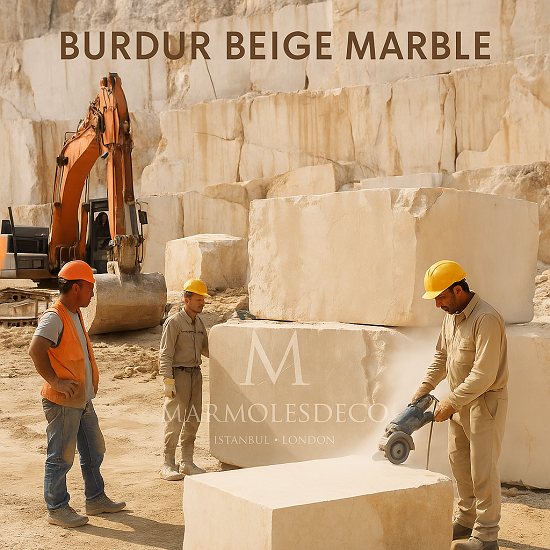
In architecture and interior design, materials do far more than fill space—they create identity, rhythm, and emotional resonance. Among the many natural stones valued for contemporary and classic projects alike, burdur beige marble has become a preferred choice for those seeking warmth without heaviness. With its soft, earthy tonal range, burdur beige marble offers a refined gentleness that pairs well with both minimalist design and richly layered interiors. It brings a sense of calm structure, grounding a space without overwhelming it.
Designers often choose burdur beige marble because it adapts so naturally to different uses. Whether placed in a hotel lobby, a private dining room, or a residential bathroom, it creates a welcoming atmosphere. Its hues feel familiar—like sun-warmed stone in a quiet courtyard. This is why architects frequently rely on burdur beige marble to build environments where comfort and refinement must coexist.
Where a cooler and more architectural tone is desired, ice grey marble steps forward. This marble carries subtle shifts of pearl, silver, and cloud-grey, offering depth without distraction. When used on expansive flooring or grand wall surfaces, ice grey marble creates visual clarity. The stone has a certain quiet sophistication that works particularly well in office towers, cultural façades, luxury apartments, and open-concept living spaces.
What makes ice grey marble compelling is not only its color but the sense of stillness it conveys. It feels calm, steady, intentional. It allows the rest of the design elements—furniture, lighting, art, greenery—to speak confidently, without competing for attention. A room clad in ice grey marble is not loud; it is composed.
Textures Formed by Time, Not Industry
Some materials shape atmosphere not through color, but through texture. turkish light travertine is one such stone. Formed through mineral-rich waters over thousands of years, turkish light travertine carries a natural, gently porous expression that softens light. This makes it ideal for environments inspired by Mediterranean architecture—terraces, courtyards, spa rooms, garden paths, and serene interiors where daylight matters.
The appeal of turkish light travertine lies in its quiet irregularities. No panel is identical to another. It feels unforced, almost organic in its presence. When used outdoors, it weathers gracefully; when used indoors, it adds a calm, tactile dimension to surfaces that might otherwise feel too polished.
Next to travertine’s soft textures stands the quiet depth of turkish limestone. This stone has been used for centuries in places of cultural importance—courtyards, mosques, monuments, and gathering spaces. The matte finish of turkish limestone carries a natural dignity. It does not demand attention, but holds presence. When architects want to design a space that feels grounded in tradition yet modern in composition, turkish limestone provides the perfect foundation.
Both turkish light travertine and turkish limestone are stones that encourage breathing space. They create interiors that feel lived-in—not brand new in a sterile way, nor aged in a worn way, but timeless, steady, human.
A Craft That Does Not Rush
Stone is a slow material. It forms slowly, is cut carefully, and is placed with intention. The one who guides this process—the turkish marble manufacturer—holds a responsibility that is part craft, part selection, part intuition. A skilled turkish marble manufacturer understands that natural stone must be handled with respect. One slab may be perfect for a lobby wall where light moves freely; another may belong to a staircase where durability matters most.
This is why working with an experienced turkish marble manufacturer is essential. Stone cannot be rushed into shape. It demands patience, knowledge of density and fracture, awareness of polishing techniques, and sensitivity to visual harmony. The relationship between quarry, workshop, and final installation is a chain of decisions that shapes how a space will ultimately feel.
Materials That Outlive Trends
Design trends change; stone remains.
Design philosophies evolve; stone adapts.
What makes natural stone enduring is not fashion—it is honesty.
burdur beige marble warms.
ice grey marble refines.
turkish light travertine breathes.
turkish limestone anchors.
And the turkish marble manufacturer ensures they are shaped with care.